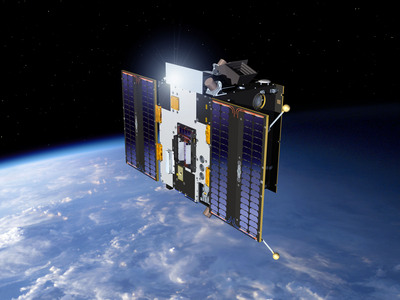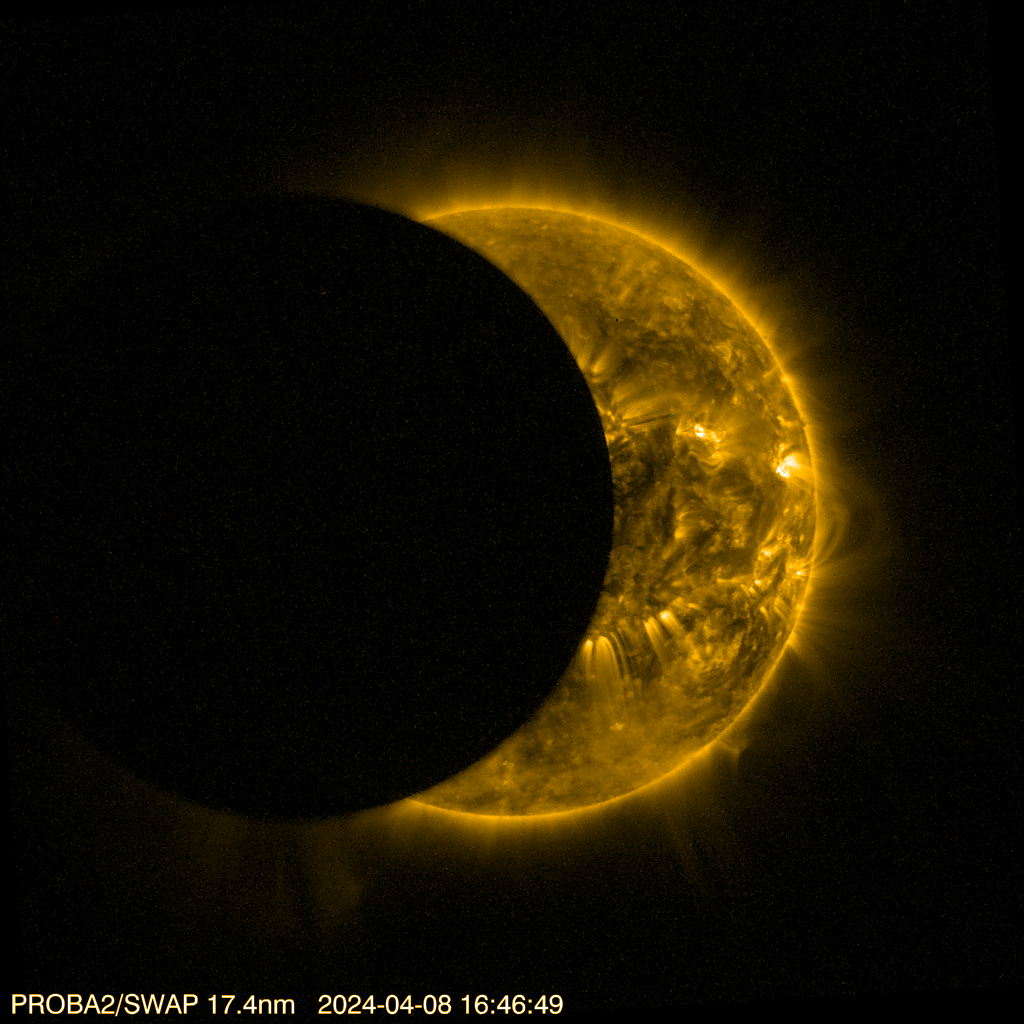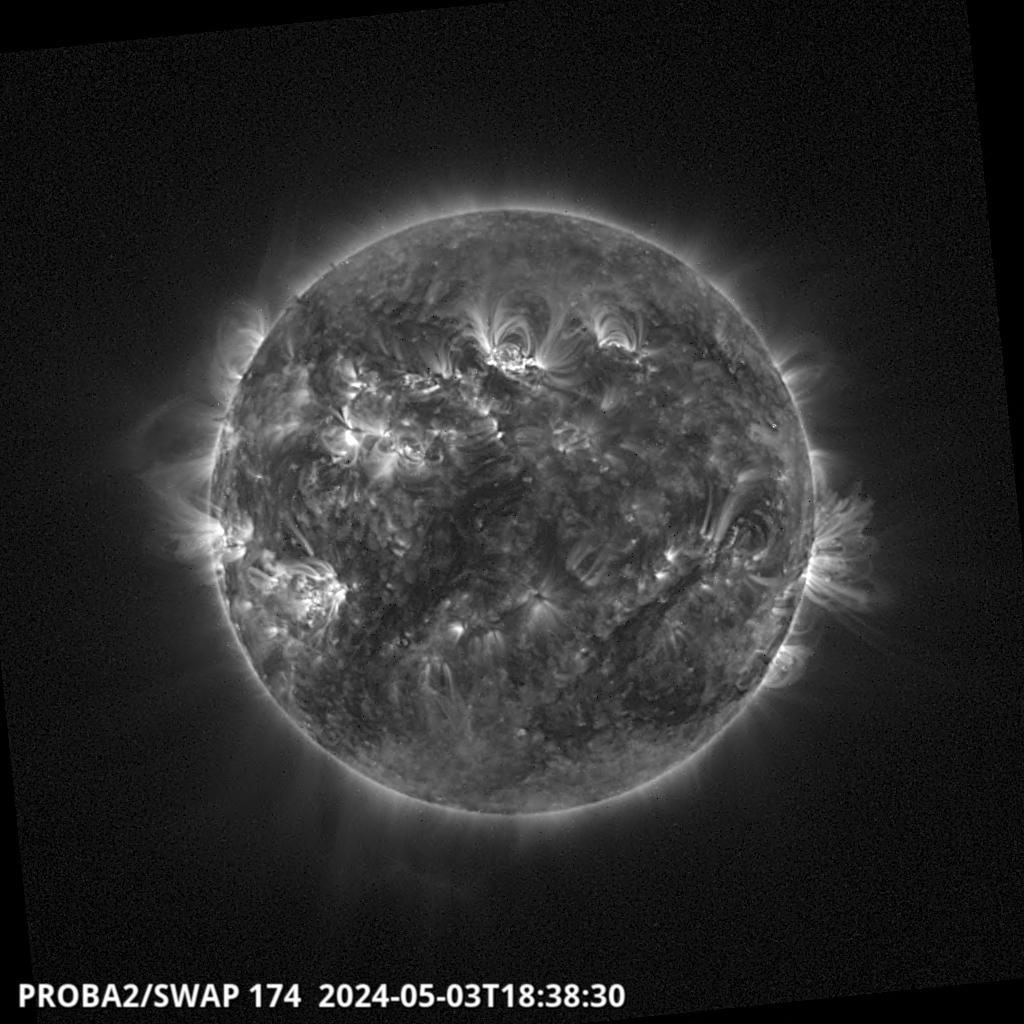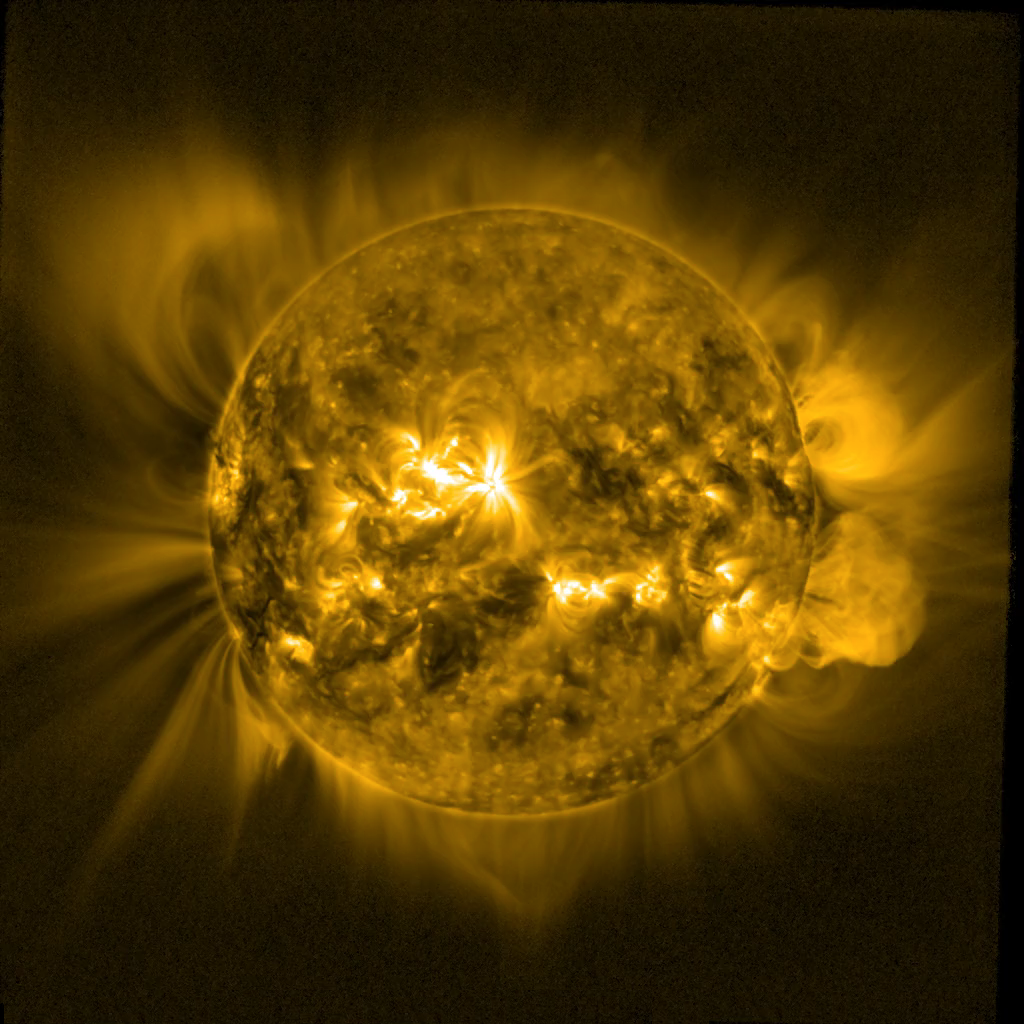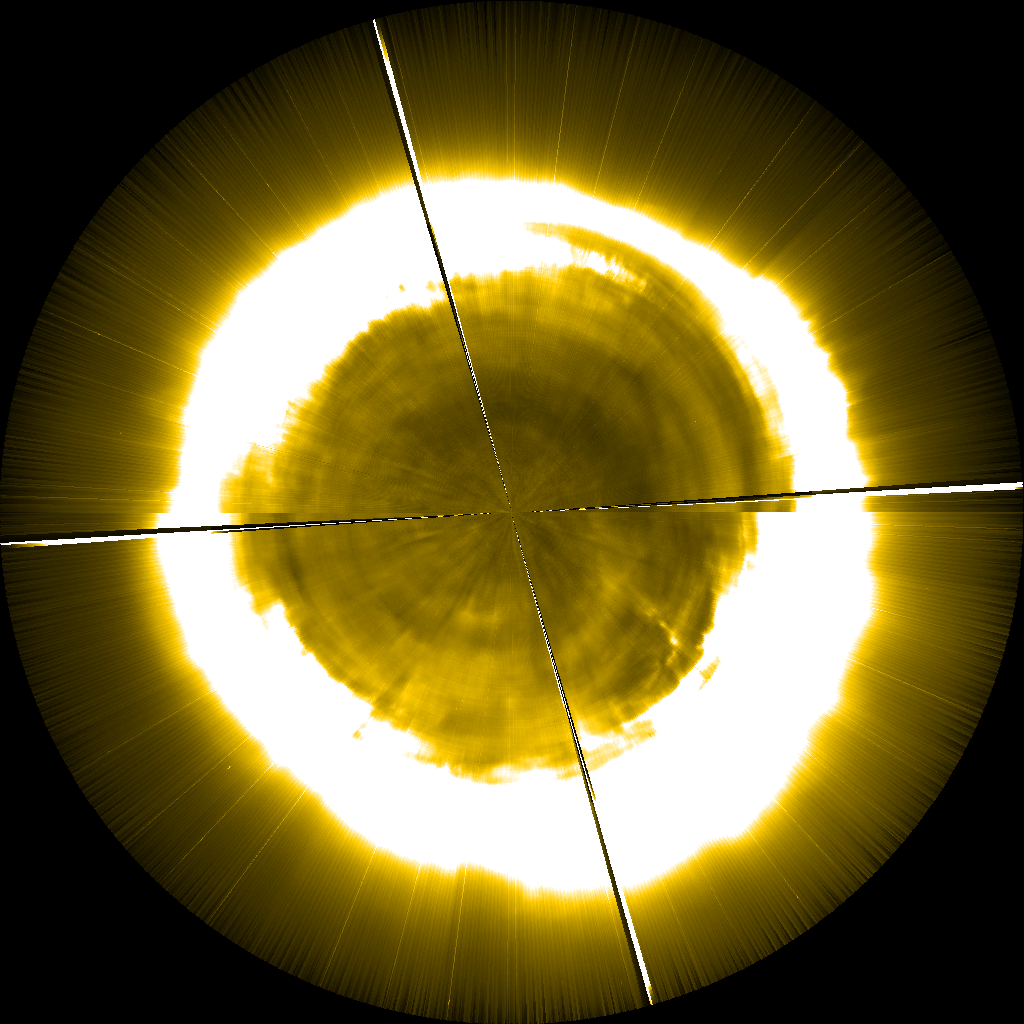
For a general description, see on this ESA web page.
| event | Mission Time | UTC | European Winter Time |
|---|---|---|---|
| withdrawal of launch service tower | L - 10min | 01:40:51 | 02:40:51 |
| Latest emergency GO/NOGO | L - 3min | 01:47:51 | 02:47:51 |
| Stage 1 main engine ignition | L - 3.2s | 01:50:48 | 02:50:48 |
| Lift-Off | L | 01:50:51 | 02:50:51 |
| separation of stage 1, ignition stage 2 | L + 2 min | 01:52:53 | 02:52:53 |
| separation of stage 2 | L + 5 min | 01:55:56 | 02:55:56 |
| first ignition BREEZE-KM US CE, injection in Transfer Orbit | L + 5.18min | 01:56:02 | 02:56:02 |
| second ignition BREEZE-KM US CE, injection in SMOS Orbit | L + 5.18 min | 02:53:31 | 03:53:31 |
| SMOS separation | L+ 1h + 10min | 03:00:44 | 04:00:44 |
| first ignition BREEZE-KM US VE, injection in Transfer Orbit | L + 1h + 23min | 03:13:57 | 04:13:57 |
| second ignition BREEZE-KM US VE, injection inPROBA2 Orbit | L + 2h + 6min | 03:57:32 | 04:57:32 |
| PROBA2 separation | L + 2h + 59min | 04:50:06 | 05:50:06 |
| third ignition BREEZE-KM US VE, deorbiting upper stage | L + 3h + 20min | 05:10:57 | 06:10:57 |

L = Launch
US CE=Upper Stage Cruise Engine of BREEZE-KM.
US VE=Upper Stage Vernier Engine of BREEZE-KM.
Like several previous space missions that featured solar telescopes, PROBA2 follows a sun-synchronous orbit, meaning it closely tracks the terminator. For most of the year, this means PROBA2 will have an unobscured view of the sun.
Satellites and other objects, like the Space Shuttle or International Space Station, in ordinary low-earth orbits pass frequently between the day side of the earth and the night side. This means that for most of these satellites, for about half of every orbit, the earth is between them and the sun.

- Cartoon of PROBA2’s Orbit
Because the instruments on PROBA2 are expected to monitor solar conditions around the clock, PROBA2 follows a sun-synchronous orbit. This means that PROBA2’s orbit will track the terminator, following the dividing line between day and night on earth over the poles as in the figure on the right. Sometimes this type of orbit is referred to as a dawn/dusk orbit. As the earth rotates below, PROBA2 remains fixed either at dawn or dusk depending on which side of the planet it is over at the time.
To account for the effects of the earth’s motion around the sun, PROBA2’s orbit must precess by approximately one degree every day, tracking the slow changes of the position of the sun in the sky throughout the year.
This means that, for most of the year, PROBA2 will have a full-time view of the sun, and will not experience eclipses of the sun behind the earth. However, because the orbit does not follow the terminator exactly, PROBA2 will experience brief periods of several weeks when eclipses of the sun by the earth do occur, specifically around December each year. During approximately 80 days (from November until January), visible eclipses occur every orbit with a duration ranging from a few minutes in November up to a maximum of 18 minutes and back to 0. These eclipses that will last for several minutes of every orbit are also scientifically useful. In this case, they provide an opportunity for onboard instruments to obtain special calibration images that cannot be captured when the spacecraft is in full sun. These images will help us better characterize the response of the SWAP and LYRA instruments to sunlight.
Orbits of this type have been used for solar observing by several satellites such as Yohkoh, TRACE, and Hinode, affording them a nearly continuous view of the Sun.
The nominal osculating orbital elements in ballistic orbit (PROBA 2 after separation) 10769 seconds after EOGS, i.e. at 4:50:06 Z are found below. The orbit information will be updated after the launch:
INPUT: EOGS =
INPUT:
INPUT: 2009/11/02 01:50:37
GMT ANGLE AT THE TIME SPECIFIED = 69.128667
INPUT:
INPUT: DURATION FROM EPOCH ABOVE TO END OF POWERED FLIGHT = 10769
INPUT:
INPUT: STATE-VECTOR IN STARSEM COORDINATE SYSTEM =
INPUT:
INPUT: X-COMPONENT = 3215.215
INPUT: Y-COMPONENT = 6316.737
INPUT: Z-COMPONENT = -462.412
INPUT: X-VELOCITY = 1.184433
INPUT: Y-VELOCITY = -0.061402
INPUT: Z-VELOCITY = 7.396658
EPOCH= 2009/11/ 2 4:50: 6.000
THE ORBITAL ELEMENTS ARESEMIMAJOR AXIS 7102.999276 KM
ECCENTRICITY 0.000001
INCLINATION 98.297868 DEG
R. A. ASCENDING NODE 131.607430 DEG
ARGUMENT OF PERIGEE 266.248169 DEG
TRUE ANOMALY 89.979635 DEG
LOCAL TIME AT DESCENDING NODE= 18: 0: 2.419ELEVATION OF MOON TO ORBIT PLANE= 61.556
ELEVATION OF SUN TO ORBIT PLANE = -66.562
-4756.764 5254.709 -462.412 0.479352 1.084838 7.396658
MOON 0.879286 -0.407263 -0.246966
SUN -0.917491 0.386269 0.094904The corresponding pseudo-TLE are the following:
PROBA-2
1 09306.20145833 .00000000 00000-0 10804-4 0 04
2 98.3023 131.6077 0010551 244.9880 111.2534 14.52115631 05
Since PROBA2 has only 2 star trackers, during an orbit, the spacecraft will perform four large-angle rotations of 90 degrees (every 24 minutes) in order to avoid blinding of the star trackers. The timing of the maneuvers is such that the exclusion angles from the star trackers towards the earth are maximized. Each maneuver will take a few minutes and will be centered around these optimal switching times. The time until the next rotation is continuously provided. One has to take into account that approximately 20 minutes per orbit are lost for spacecraft stabilization procedures.

- Sketch of Large-Angle Rotations of PROBA2 Along Its Orbit